How to Build an MVP Without a Technical Co-Founder.
How do you turn an idea into a secure, scalable, and tested product without spending months searching for a CTO or managing offshore developers?
For years, startup founders were given the exact same advice: If you want to build a serious tech product, you must find a technical co-founder.
In 2026, that rulebook has fundamentally changed.
Artificial intelligence has drastically accelerated how software gets built. As a non-technical founder, you can now describe an idea, mock up wireframes, and even generate working code in an afternoon.
However, there is a massive gap between generating a cool demo and launching a production-ready MVP that real customers can trust and pay for.
The real challenge today isn't "Can AI write code?" The real problem is: How do you turn an idea into a secure, scalable, and tested product without spending months searching for a CTO or managing offshore developers?
Here is how modern founders are building scalable products in 2026—and the critical mistakes you need to avoid.
What a Production-Ready MVP Actually Looks Like in 2026
An MVP (Minimum Viable Product) is not just a quick prototype. It is the foundation of your business. Its job is to help you validate customer demand, test core workflows, and prove your business model to investors.
To do that reliably, even a simple MVP needs:
A clear user journey: Intuitive UI/UX that guides users naturally.
A focused feature set: Solving one core problem exceptionally well.
Robust architecture: Working authentication, secure data storage, and essential third-party integrations.
Code ownership: 100% control over the source code, deployment, and infrastructure.
Reliability: Enough stability to handle real users without breaking down.
This is where many "quick-build" tools fail. They produce visually impressive prototypes that crumble as soon as real users start interacting with them.
The 4 Traditional Paths (And Why They Friction Non-Technical Founders)
If you lack a technical background, you traditionally have four paths—each with significant tradeoffs:
Approach | Main Advantage | Major Drawback |
Search for a Co-Founder | Technical alignment | Can take 6–12 months; costs valuable equity and control. |
Hire Freelancers | Lower initial cost | Requires you to act as the QA lead, product manager, and tech lead. |
Hire a Dev Agency | Professional build | Extremely expensive; slow development cycles; rigid scopes. |
Use DIY AI Builders | Fast initial speed | Produces fragmented code, missing architecture, and long-term lock-in. |
Getting something built is easier than ever. Getting something production-ready remains the real hurdle.
Why AI Code Generators Aren't Enough On Their Own
AI tools can spit out lines of code at incredible speeds. But code is only one small piece of software engineering.
A real software product requires system architecture, security protocols, automated testing, continuous integration, and clear documentation.
What the data says: Research from SonarSource indicates that while AI-assisted code is widespread, engineering teams still hesitate to push raw AI code to production without human oversight. Furthermore, New Relic reports a rise in production incidents directly linked to unverified, AI-generated code.
The winning strategy isn't "prompt and pray." The winning strategy is orchestrated delivery—using structured AI processes backed by rigorous acceptance criteria and automated testing.
The Modern Alternative: AI-Orchestrated Technical Delivery
Instead of choosing between losing equity to a co-founder or managing freelancers yourself, modern founders are turning to orchestrated execution systems.
This is precisely why we built Paranu.
Paranu acts as your AI-powered technical execution partner. Rather than handing you a complex developer tool and leaving you to manage the rest, Paranu manages the end-to-end software delivery lifecycle:
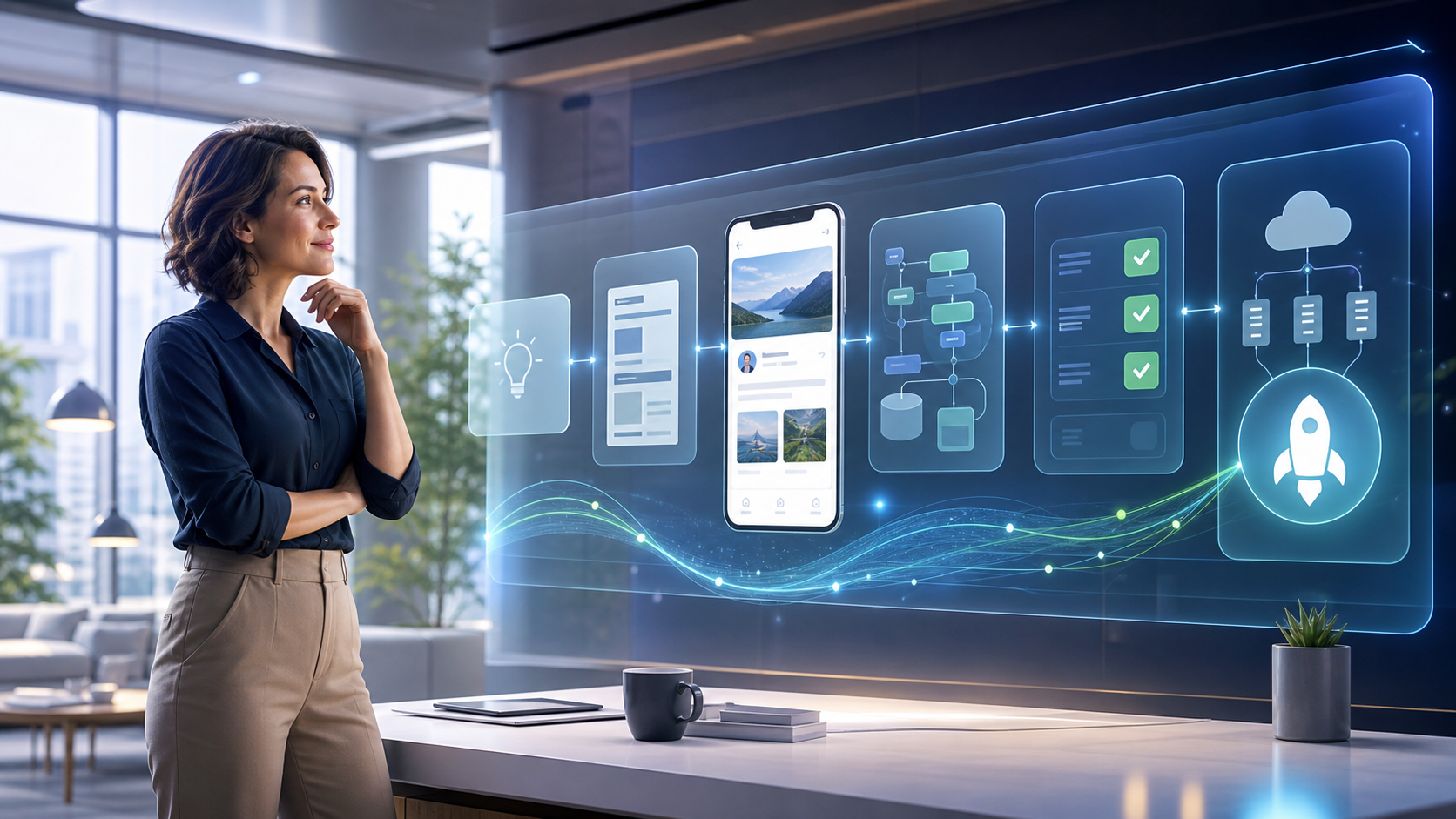
Natural Language Scope: You describe your product vision in plain English. Paranu translates it into a structured product blueprint, complete with user flows, screen designs, acceptance criteria, and system architecture.
Multi-Agent Building: Connected AI agents handle planning, coding, security checks, testing, and DevOps deployment seamlessly.
Live Product Review: You test a fully working application in a live environment before making a final commitment—no paying blindly for static screenshots.
Full IP Ownership: Once deployed, you retain 100% ownership of the repository, source code, Git exports, and architecture. No vendor lock-in, ever.
How to Prepare Before You Build Your MVP
Even with the right execution partner, the success of your MVP comes down to business clarity. Before writing a single line of code, make sure you can answer these key questions:
Who is the immediate user? (Be specific: e.g., "B2B sales managers at mid-size agencies," not "Salespeople").
What is the primary problem? Identify the single biggest pain point they face daily.
What is the core workflow? What is the one action the user must successfully complete to get value?
Which features can wait for V2? Ruthlessly slice away non-essential features.
You don't need to know which database to pick or which framework to use. You just need to know your user and their problem.
Final Thoughts: Launching in 2026
Not having a technical co-founder is no longer a blocker to building a venture-backed or bootstrapped software company.
The primary advantage in 2026 isn't just access to AI tools—everyone has access to them. The true advantage belongs to founders who use a reliable execution system that transforms business ideas into production-ready software without administrative overhead.
Ready to bring your product to life?
If you have a startup idea and want to launch a production-ready MVP in weeks, let's talk.
Get a Free MVP Assessment & Product Blueprint with Paranu →